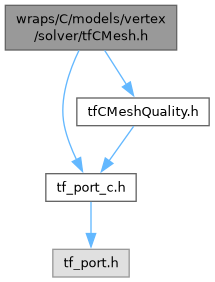
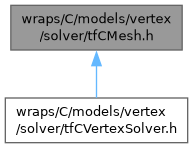
Go to the source code of this file.
Functions | |
| HRESULT | tfVertexSolverMeshHasQuality (bool *result) |
| Test whether this mesh has a mesh quality instance. | |
| HRESULT | tfVertexSolverMeshGetQuality (struct tfVertexSolverMeshQualityHandle *quality) |
| Get the mesh quality instance. | |
| HRESULT | tfVertexSolverMeshSetQuality (struct tfVertexSolverMeshQualityHandle *quality) |
| Set the mesh quality instance. | |
| HRESULT | tfVertexSolverMeshQualityWorking (bool *result) |
| Test whether a mesh quality instance is working on the mesh. | |
| HRESULT | tfVertexSolverMeshEnsureAvailableVertices (unsigned int numAlloc) |
| Ensure that there are a given number of allocated vertices. | |
| HRESULT | tfVertexSolverMeshEnsureAvailableSurfaces (unsigned int numAlloc) |
| Ensure that there are a given number of allocated surfaces. | |
| HRESULT | tfVertexSolverMeshEnsureAvailableBodies (unsigned int numAlloc) |
| Ensure that there are a given number of allocated bodies. | |
| HRESULT | tfVertexSolverMeshCreateVertex (struct tfVertexSolverVertexHandleHandle *handle, unsigned int pid) |
| Create a vertex. | |
| HRESULT | tfVertexSolverMeshCreateVertices (struct tfVertexSolverVertexHandleHandle **handles, unsigned int *pids, unsigned int numObjs) |
| Create a vertices. | |
| HRESULT | tfVertexSolverMeshCreateSurface (struct tfVertexSolverSurfaceHandleHandle *handle) |
| Create a surface. | |
| HRESULT | tfVertexSolverMeshCreateSurfaces (struct tfVertexSolverSurfaceHandleHandle **handles, unsigned int numObjs) |
| Create surfaces. | |
| HRESULT | tfVertexSolverMeshCreateBody (struct tfVertexSolverBodyHandleHandle *handle) |
| Create a body. | |
| HRESULT | tfVertexSolverMeshCreateBodies (struct tfVertexSolverBodyHandleHandle *handles, unsigned int numObjs) |
| Create a bodies. | |
| HRESULT | tfVertexSolverMeshLock () |
| Locks the mesh for thread-safe operations. | |
| HRESULT | tfVertexSolverMeshUnlock () |
| Unlocks the mesh for thread-safe operations. | |
| HRESULT | tfVertexSolverMeshFindVertex (tfFloatP_t *pos, tfFloatP_t tol, struct tfVertexSolverVertexHandleHandle *v) |
| Find a vertex in this mesh. | |
| HRESULT | tfVertexSolverMeshGetVertexByPID (unsigned int pid, struct tfVertexSolverVertexHandleHandle *v) |
| Get the vertex for a given particle id. | |
| HRESULT | tfVertexSolverMeshGetVertex (unsigned int idx, struct tfVertexSolverVertexHandleHandle *v) |
| Get the vertex at a location in the list of vertices. | |
| HRESULT | tfVertexSolverMeshGetSurface (unsigned int idx, struct tfVertexSolverSurfaceHandleHandle *s) |
| Get a surface at a location in the list of surfaces. | |
| HRESULT | tfVertexSolverMeshGetBody (unsigned int idx, struct tfVertexSolverBodyHandleHandle *b) |
| Get a body at a location in the list of bodies. | |
| HRESULT | tfVertexSolverMeshNumVertices (unsigned int *result) |
| Get the number of vertices. | |
| HRESULT | tfVertexSolverMeshNumSurfaces (unsigned int *result) |
| Get the number of surfaces. | |
| HRESULT | tfVertexSolverMeshNumBodies (unsigned int *result) |
| Get the number of bodies. | |
| HRESULT | tfVertexSolverMeshSizeVertices (unsigned int *result) |
| Get the size of the list of vertices. | |
| HRESULT | tfVertexSolverMeshSizeSurfaces (unsigned int *result) |
| Get the size of the list of surfaces. | |
| HRESULT | tfVertexSolverMeshSizeBodies (unsigned int *result) |
| Get the size of the list of bodies. | |
| HRESULT | tfVertexSolverMeshValidate (bool *result) |
| Validate state of the mesh. | |
| HRESULT | tfVertexSolverMeshMakeDirty () |
| Manually notify that the mesh has been changed. | |
| HRESULT | tfVertexSolverMeshConnectedVertices (struct tfVertexSolverVertexHandleHandle *v1, struct tfVertexSolverVertexHandleHandle *v2, bool *result) |
| Check whether two vertices are connected. | |
| HRESULT | tfVertexSolverMeshConnectedSurfaces (struct tfVertexSolverSurfaceHandleHandle *s1, struct tfVertexSolverSurfaceHandleHandle *s2, bool *result) |
| Check whether two surfaces are connected. | |
| HRESULT | tfVertexSolverMeshConnectedBodies (struct tfVertexSolverBodyHandleHandle *b1, struct tfVertexSolverBodyHandleHandle *b2, bool *result) |
| Check whether two bodies are connected. | |
| HRESULT | tfVertexSolverMeshRemoveVertex (struct tfVertexSolverVertexHandleHandle *v) |
| Remove a vertex from the mesh; all connected surfaces and bodies are also removed. | |
| HRESULT | tfVertexSolverMeshRemoveVertices (struct tfVertexSolverVertexHandleHandle **v, unsigned int numObjs) |
| Remove vertices from the mesh; all connected surfaces and bodies are also removed. | |
| HRESULT | tfVertexSolverMeshRemoveSurface (struct tfVertexSolverSurfaceHandleHandle *s) |
| Remove a surface from the mesh; all connected bodies are also removed. | |
| HRESULT | tfVertexSolverMeshRemoveSurfaces (struct tfVertexSolverSurfaceHandleHandle **s, unsigned int numObjs) |
| Remove surfaces from the mesh; all connected bodies are also removed. | |
| HRESULT | tfVertexSolverMeshRemoveBody (struct tfVertexSolverBodyHandleHandle *b) |
| Remove a body from the mesh. | |
| HRESULT | tfVertexSolverMeshRemoveBodies (struct tfVertexSolverBodyHandleHandle **b, unsigned int numObjs) |
| Remove bodies from the mesh. | |
| HRESULT | tfVertexSolverMeshIs3D (bool *result) |
| Test whether the mesh is 3D. | |
Function Documentation
◆ tfVertexSolverMeshConnectedBodies()
| HRESULT tfVertexSolverMeshConnectedBodies | ( | struct tfVertexSolverBodyHandleHandle * | b1, |
| struct tfVertexSolverBodyHandleHandle * | b2, | ||
| bool * | result ) |
Check whether two bodies are connected.
- Parameters
-
b1 first body b2 second body result result of the test
◆ tfVertexSolverMeshConnectedSurfaces()
| HRESULT tfVertexSolverMeshConnectedSurfaces | ( | struct tfVertexSolverSurfaceHandleHandle * | s1, |
| struct tfVertexSolverSurfaceHandleHandle * | s2, | ||
| bool * | result ) |
Check whether two surfaces are connected.
- Parameters
-
s1 first surface s2 second surface result result of the test
◆ tfVertexSolverMeshConnectedVertices()
| HRESULT tfVertexSolverMeshConnectedVertices | ( | struct tfVertexSolverVertexHandleHandle * | v1, |
| struct tfVertexSolverVertexHandleHandle * | v2, | ||
| bool * | result ) |
Check whether two vertices are connected.
- Parameters
-
v1 first vertex v2 second vertex result result of the test
◆ tfVertexSolverMeshCreateBodies()
| HRESULT tfVertexSolverMeshCreateBodies | ( | struct tfVertexSolverBodyHandleHandle * | handles, |
| unsigned int | numObjs ) |
Create a bodies.
- Parameters
-
handles handles to populate numObjs number of instances to create
◆ tfVertexSolverMeshCreateBody()
| HRESULT tfVertexSolverMeshCreateBody | ( | struct tfVertexSolverBodyHandleHandle * | handle | ) |
Create a body.
- Parameters
-
handle handle to populate
◆ tfVertexSolverMeshCreateSurface()
| HRESULT tfVertexSolverMeshCreateSurface | ( | struct tfVertexSolverSurfaceHandleHandle * | handle | ) |
Create a surface.
- Parameters
-
handle handle to populate
◆ tfVertexSolverMeshCreateSurfaces()
| HRESULT tfVertexSolverMeshCreateSurfaces | ( | struct tfVertexSolverSurfaceHandleHandle ** | handles, |
| unsigned int | numObjs ) |
Create surfaces.
- Parameters
-
handles handles to populate numObjs number of instances to create
◆ tfVertexSolverMeshCreateVertex()
| HRESULT tfVertexSolverMeshCreateVertex | ( | struct tfVertexSolverVertexHandleHandle * | handle, |
| unsigned int | pid ) |
Create a vertex.
- Parameters
-
handle handle to populate pid id of underlying particle
◆ tfVertexSolverMeshCreateVertices()
| HRESULT tfVertexSolverMeshCreateVertices | ( | struct tfVertexSolverVertexHandleHandle ** | handles, |
| unsigned int * | pids, | ||
| unsigned int | numObjs ) |
Create a vertices.
- Parameters
-
handles handles to populate pids ids of underlying particles numObjs number of instances to create
◆ tfVertexSolverMeshEnsureAvailableBodies()
| HRESULT tfVertexSolverMeshEnsureAvailableBodies | ( | unsigned int | numAlloc | ) |
Ensure that there are a given number of allocated bodies.
- Parameters
-
numAlloc number to ensure allocated
◆ tfVertexSolverMeshEnsureAvailableSurfaces()
| HRESULT tfVertexSolverMeshEnsureAvailableSurfaces | ( | unsigned int | numAlloc | ) |
Ensure that there are a given number of allocated surfaces.
- Parameters
-
numAlloc number to ensure allocated
◆ tfVertexSolverMeshEnsureAvailableVertices()
| HRESULT tfVertexSolverMeshEnsureAvailableVertices | ( | unsigned int | numAlloc | ) |
Ensure that there are a given number of allocated vertices.
- Parameters
-
numAlloc number to ensure allocated
◆ tfVertexSolverMeshFindVertex()
| HRESULT tfVertexSolverMeshFindVertex | ( | tfFloatP_t * | pos, |
| tfFloatP_t | tol, | ||
| struct tfVertexSolverVertexHandleHandle * | v ) |
Find a vertex in this mesh.
- Parameters
-
pos position to look tol distance tolerance v a vertex within the distance tolerance of the position, otherwise NULL
◆ tfVertexSolverMeshGetBody()
| HRESULT tfVertexSolverMeshGetBody | ( | unsigned int | idx, |
| struct tfVertexSolverBodyHandleHandle * | b ) |
Get a body at a location in the list of bodies.
- Parameters
-
idx index b body
◆ tfVertexSolverMeshGetQuality()
| HRESULT tfVertexSolverMeshGetQuality | ( | struct tfVertexSolverMeshQualityHandle * | quality | ) |
Get the mesh quality instance.
- Parameters
-
quality mesh quality instance
◆ tfVertexSolverMeshGetSurface()
| HRESULT tfVertexSolverMeshGetSurface | ( | unsigned int | idx, |
| struct tfVertexSolverSurfaceHandleHandle * | s ) |
Get a surface at a location in the list of surfaces.
- Parameters
-
idx index s surface
◆ tfVertexSolverMeshGetVertex()
| HRESULT tfVertexSolverMeshGetVertex | ( | unsigned int | idx, |
| struct tfVertexSolverVertexHandleHandle * | v ) |
Get the vertex at a location in the list of vertices.
- Parameters
-
idx index v handle to populate
◆ tfVertexSolverMeshGetVertexByPID()
| HRESULT tfVertexSolverMeshGetVertexByPID | ( | unsigned int | pid, |
| struct tfVertexSolverVertexHandleHandle * | v ) |
Get the vertex for a given particle id.
- Parameters
-
pid particle id v handle to populate
◆ tfVertexSolverMeshHasQuality()
| HRESULT tfVertexSolverMeshHasQuality | ( | bool * | result | ) |
Test whether this mesh has a mesh quality instance.
- Parameters
-
result result of the test
◆ tfVertexSolverMeshIs3D()
| HRESULT tfVertexSolverMeshIs3D | ( | bool * | result | ) |
Test whether the mesh is 3D.
A 3D mesh has at least one body.
- Parameters
-
result result of the test
◆ tfVertexSolverMeshNumBodies()
| HRESULT tfVertexSolverMeshNumBodies | ( | unsigned int * | result | ) |
Get the number of bodies.
- Parameters
-
result result of the test
◆ tfVertexSolverMeshNumSurfaces()
| HRESULT tfVertexSolverMeshNumSurfaces | ( | unsigned int * | result | ) |
Get the number of surfaces.
- Parameters
-
result result of the test
◆ tfVertexSolverMeshNumVertices()
| HRESULT tfVertexSolverMeshNumVertices | ( | unsigned int * | result | ) |
Get the number of vertices.
- Parameters
-
result result of the test
◆ tfVertexSolverMeshQualityWorking()
| HRESULT tfVertexSolverMeshQualityWorking | ( | bool * | result | ) |
Test whether a mesh quality instance is working on the mesh.
- Parameters
-
result result of the test
◆ tfVertexSolverMeshRemoveBodies()
| HRESULT tfVertexSolverMeshRemoveBodies | ( | struct tfVertexSolverBodyHandleHandle ** | b, |
| unsigned int | numObjs ) |
Remove bodies from the mesh.
- Parameters
-
b bodies to remove numObjs number of instances
◆ tfVertexSolverMeshRemoveBody()
| HRESULT tfVertexSolverMeshRemoveBody | ( | struct tfVertexSolverBodyHandleHandle * | b | ) |
Remove a body from the mesh.
- Parameters
-
b body to remove
◆ tfVertexSolverMeshRemoveSurface()
| HRESULT tfVertexSolverMeshRemoveSurface | ( | struct tfVertexSolverSurfaceHandleHandle * | s | ) |
Remove a surface from the mesh; all connected bodies are also removed.
- Parameters
-
s surface to remove
◆ tfVertexSolverMeshRemoveSurfaces()
| HRESULT tfVertexSolverMeshRemoveSurfaces | ( | struct tfVertexSolverSurfaceHandleHandle ** | s, |
| unsigned int | numObjs ) |
Remove surfaces from the mesh; all connected bodies are also removed.
- Parameters
-
s surfaces to remove numObjs number of instances
◆ tfVertexSolverMeshRemoveVertex()
| HRESULT tfVertexSolverMeshRemoveVertex | ( | struct tfVertexSolverVertexHandleHandle * | v | ) |
Remove a vertex from the mesh; all connected surfaces and bodies are also removed.
- Parameters
-
v vertex to remove
◆ tfVertexSolverMeshRemoveVertices()
| HRESULT tfVertexSolverMeshRemoveVertices | ( | struct tfVertexSolverVertexHandleHandle ** | v, |
| unsigned int | numObjs ) |
Remove vertices from the mesh; all connected surfaces and bodies are also removed.
- Parameters
-
v vertices to remove numObjs number of instances
◆ tfVertexSolverMeshSetQuality()
| HRESULT tfVertexSolverMeshSetQuality | ( | struct tfVertexSolverMeshQualityHandle * | quality | ) |
Set the mesh quality instance.
- Parameters
-
quality mesh quality instance
◆ tfVertexSolverMeshSizeBodies()
| HRESULT tfVertexSolverMeshSizeBodies | ( | unsigned int * | result | ) |
Get the size of the list of bodies.
- Parameters
-
result result of the test
◆ tfVertexSolverMeshSizeSurfaces()
| HRESULT tfVertexSolverMeshSizeSurfaces | ( | unsigned int * | result | ) |
Get the size of the list of surfaces.
- Parameters
-
result result of the test
◆ tfVertexSolverMeshSizeVertices()
| HRESULT tfVertexSolverMeshSizeVertices | ( | unsigned int * | result | ) |
Get the size of the list of vertices.
- Parameters
-
result result of the test
◆ tfVertexSolverMeshValidate()
| HRESULT tfVertexSolverMeshValidate | ( | bool * | result | ) |
Validate state of the mesh.
- Parameters
-
result result of the test
